
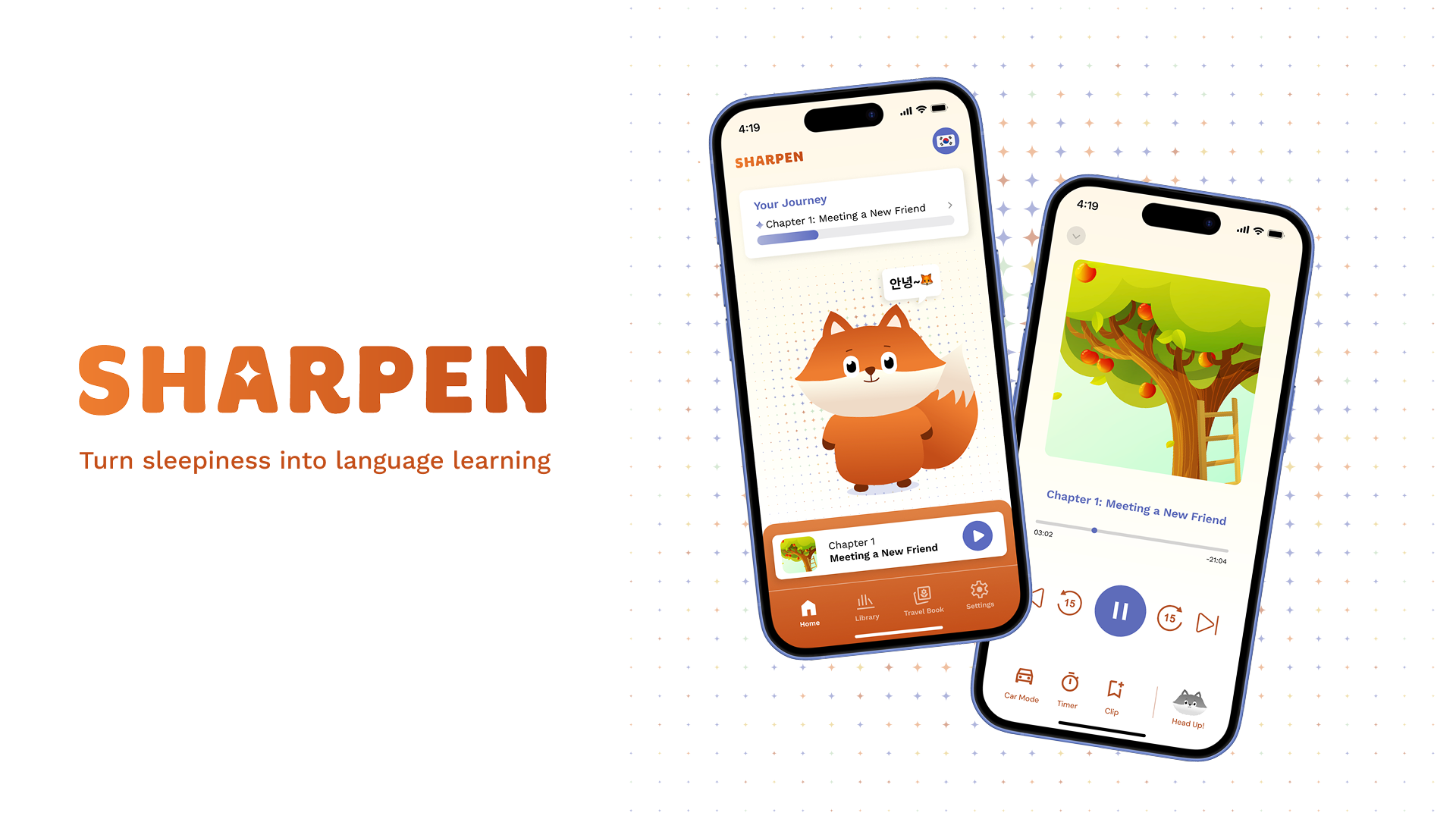
Sharpen is a conversational language learning app designed to transform drowsy commute time into a meaningful and safe experience. By combining passive audio lessons with head posture monitoring, it helps drivers stay gently engaged and alert while on the road.
*This is a school project
Project Type
UX case study
Project Year
2025
Pain Points
Many drivers rely on short-term fixes for drowsiness, and while research suggests that mental engagement can help, options like conversation aren’t always available, and some activities may be too distracting while driving.
Project Goals
Use story chapters and drowsiness detection to keep drivers gently engaged and alert through conversational language learning. Transform time spent driving into a meaningful experience.
Target Audience
Sharpen is designed for commuters aged 20–40, primarily college students and working adults, who drive regularly and want a safe, low-effort way to stay alert while making their commute time more purposeful.
User Research 📝
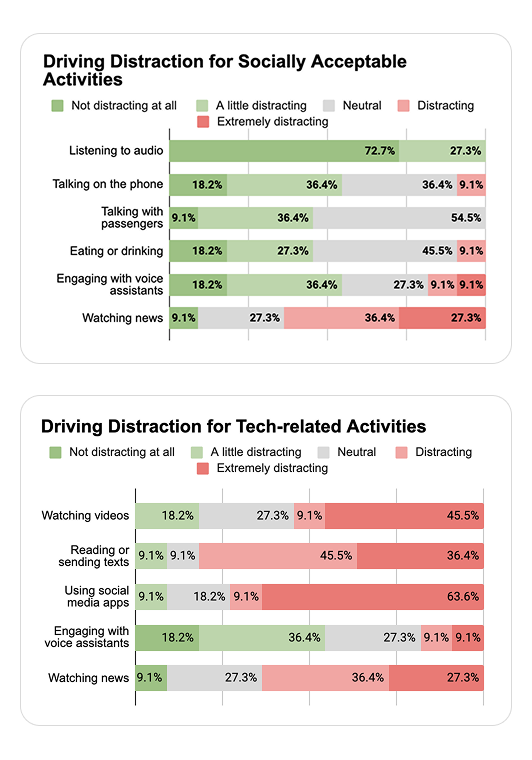
To guide design decisions, a survey was conducted with 11 individuals aged 22–41 to understand their driving habits, comfort with voice tools, and openness to in-car language learning.
The survey was created using Tally for mobile-friendly access, and responses were analyzed using Google Sheets, where insights were visualized in a custom dashboard.
1. Key Insights
The dashboard revealed that users overwhelmingly favor socially acceptable and low-effort activities—like listening to audio—while driving, and view tech-related actions such as texting or using social media as highly distracting.
2. Recommendations
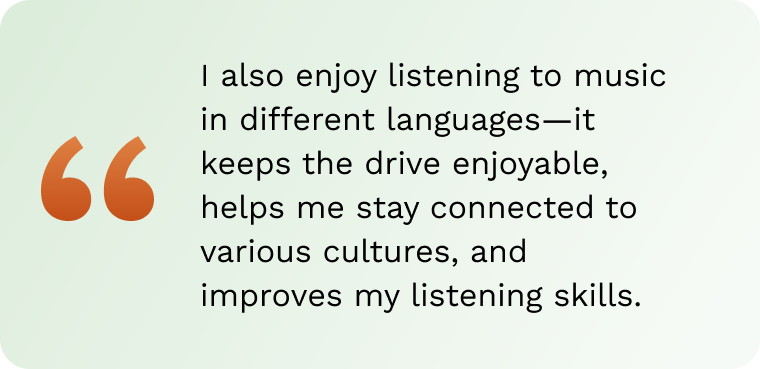
- Prioritize passive listening with light, optional speaking.
- Minimize reliance on voice commands while driving.
- Design for low cognitive load, using simple, predictable interactions that don’t demand user attention.

3. Persona
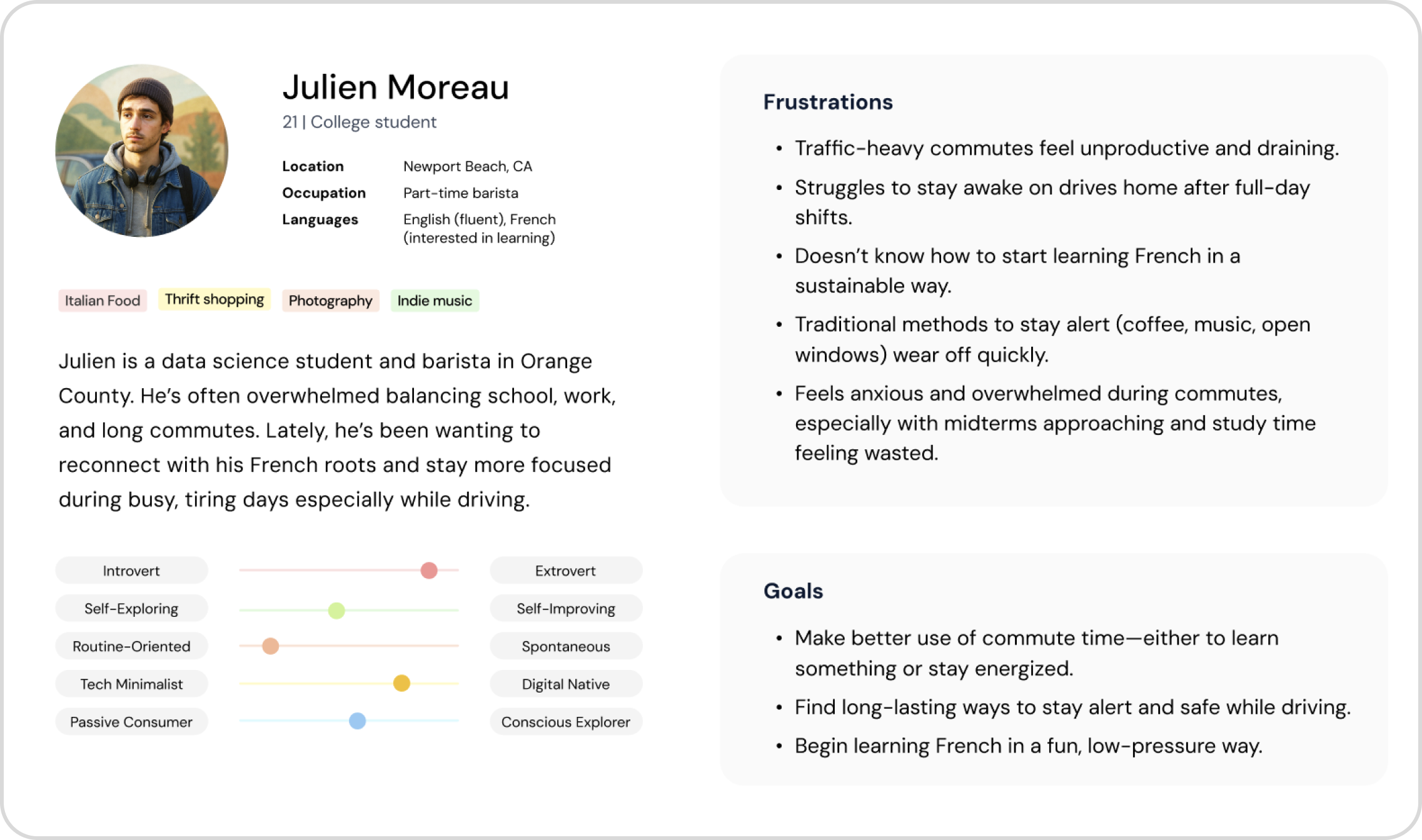
Based on survey findings and user behaviors, a persona was created to guide empathetic, user-centered design decisions.
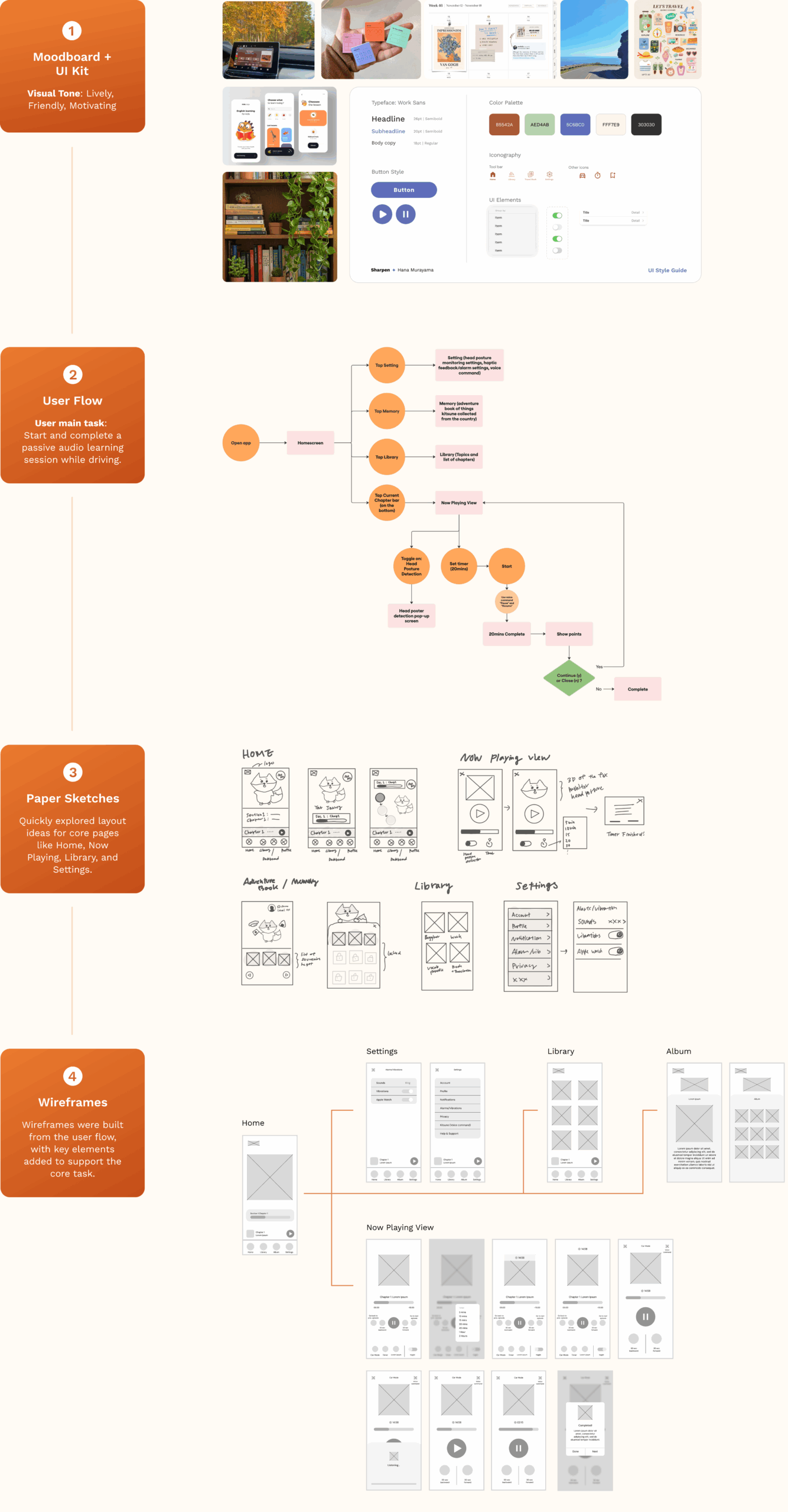
Design Thinking in Action💡
Final Design 🎨
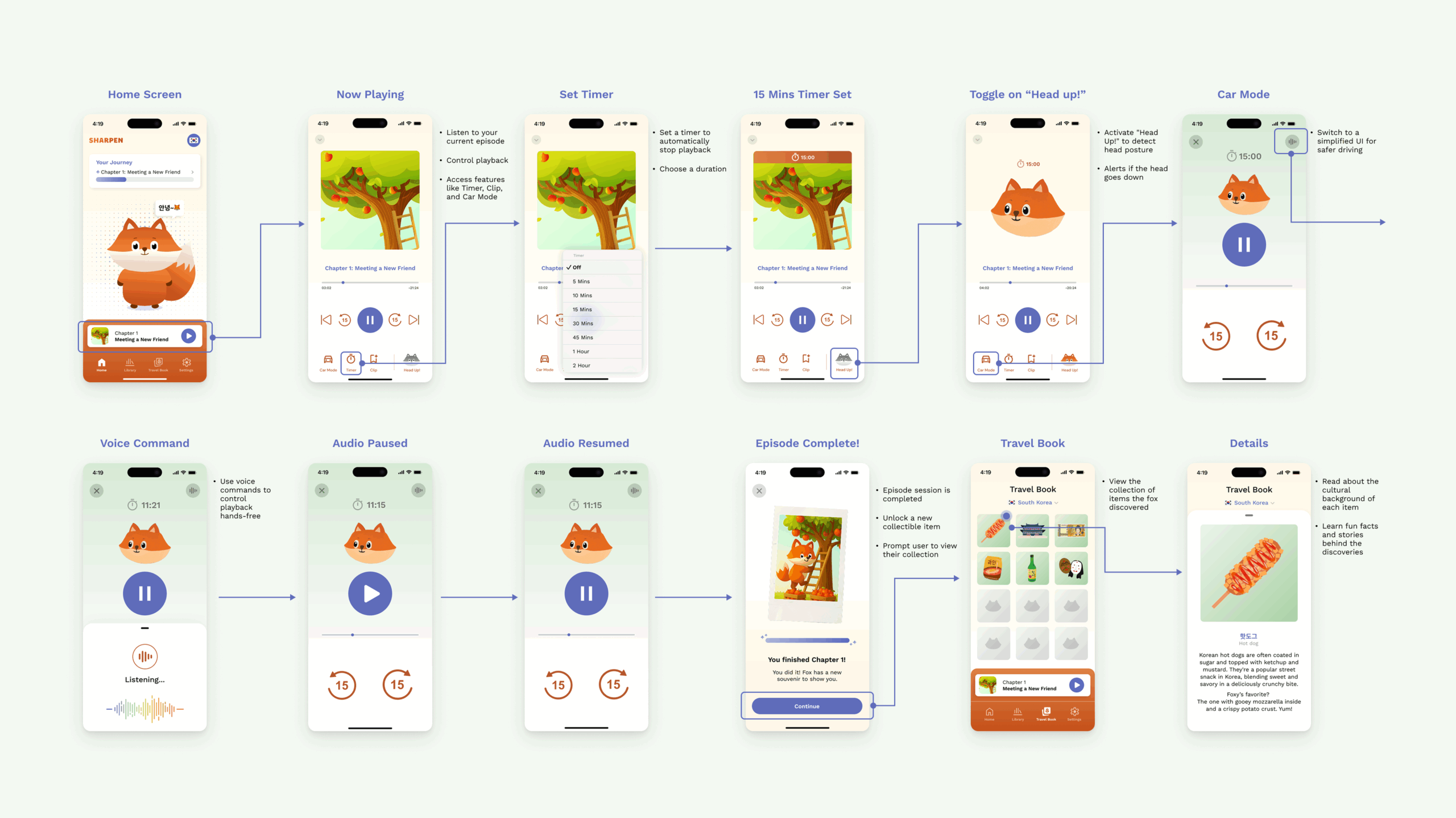
Designed to solve key user pain points, Sharpen offers a safe, passive listening experience with light, optional interaction. Sharpen uses chapter-based, conversational language learning alongside head posture detection to keep drivers gently engaged and alert—a proactive solution shaped by user research and everyday driving habits.
Next Steps 🌱
What I learned
Working on Sharpen challenged me to balance engagement and safety – two goals that often conflict in mobile and in-car experiences. Although I wasn’t able to conduct real-world testing due to safety concerns, this constraint pushed me to think critically about passive interaction models and ethical research practices. It reminded me that thoughtful design often emerges from real-world limitations.
Next Steps
If Sharpen were to move beyond the conceptual stage, the next steps would include:
- Conducting user testing in safe, simulated environments
- Creating audio-based learning modules tailored for passive use
- Gathering feedback on the drowsiness detection feature
- Exploring collaboration opportunities with car tech or language learning platforms